

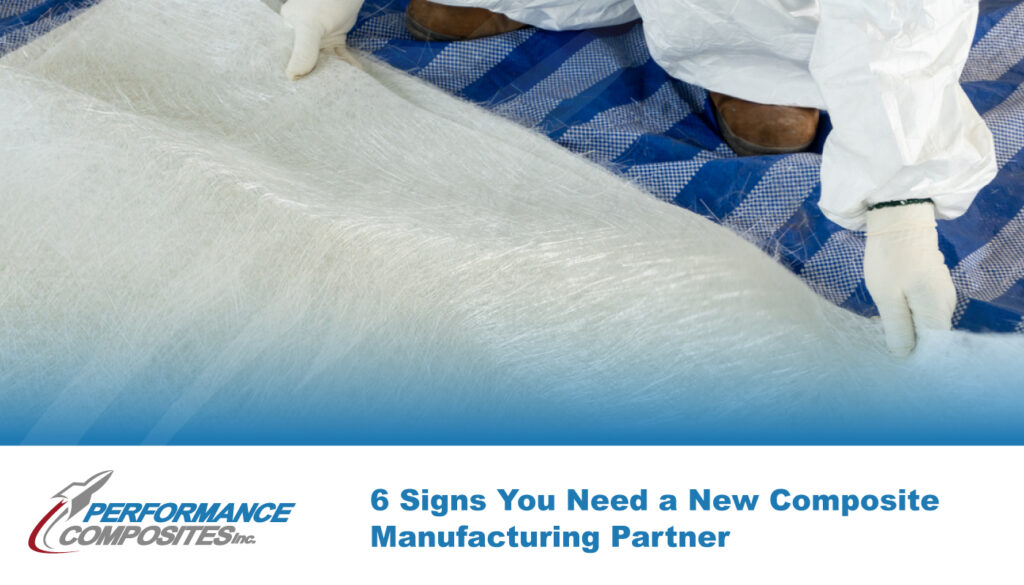
A composite manufacturing relationship affects far more than the individual parts arriving at your facility. Engineering support, tooling capabilities, repeatability, production capacity, finishing, hardware installation, and communication can all influence schedules and the amount of work your own team must manage.
Industrial composite manufacturing works best when engineering and production remain closely connected throughout the project. When recurring supplier problems begin affecting quality, timelines, scalability, or internal workload, it may be time to evaluate whether the current manufacturing arrangement still meets your needs.
Specification Changes Take Too Long to Resolve
Engineering changes are a normal part of many custom manufacturing programs. Dimensions may change, hardware can be relocated, reinforcement requirements may need adjustment, or a component may require modifications after prototype evaluation.
Problems arise when even straightforward revisions become prolonged exchanges between engineering teams, manufacturers, and outside suppliers. A manufacturing partner with integrated engineering and production capabilities can evaluate how a proposed change affects tooling, materials, fabrication, machining, and finishing before it reaches the production floor.
For composite parts for industrial applications, faster communication between these functions can help keep revisions from becoming production bottlenecks.
Your Supplier Doesn’t Build Its Own Tooling In-House
Tooling has a direct influence on component geometry, repeatability, surface characteristics, and production efficiency. When molds and fixtures are produced by an outside provider, revisions may require another company to become involved before manufacturing can continue.
In-house tooling keeps this critical stage closer to engineering and production. Tooling teams can communicate directly with the people designing and manufacturing fiberglass industrial components, allowing required adjustments to be addressed without adding another supplier to the process.
Internal tooling can be particularly useful for custom components that may evolve between prototype development and full production.
Quality Is Inconsistent from One Production Run to the Next
A prototype that meets specifications is only valuable if the manufacturing process can reproduce the required results. Variation between production runs may create problems with fit, dimensions, finishing, hardware placement, or assembly.
Consistent industrial composite manufacturing depends on controlled materials, established fabrication procedures, accurate tooling, defined secondary operations, and appropriate quality processes. If recurring variation is affecting downstream operations, identifying where that variation enters the manufacturing process becomes important.
Reliable production should focus on repeatability rather than treating each order like a new project.
You’re Fitting Out Bare Parts Instead of Receiving Ready-to-Install Components
A molded composite component may still require substantial work before it can be used. Trimming, machining, painting, inserts, brackets, and hardware installation can leave customers coordinating several additional operations after the primary fabrication is complete.
Industrial equipment composite solutions can extend beyond molding to provide components at a later stage of completion. When appropriate capabilities are available, parts can arrive painted, machined, fitted with specified hardware, or otherwise prepared for their next assembly stage.
This approach can reduce the number of secondary operations customers must arrange internally or outsource elsewhere.
Scaling from Prototype to Full Production Keeps Stalling
Producing a successful prototype and establishing a repeatable production process are different manufacturing challenges. As quantities increase, tooling durability, workflow, material handling, machining, finishing, quality, and production capacity become increasingly important.
Composite parts for industrial applications should be developed with expected production quantities in mind. If a supplier can produce prototypes but repeatedly struggles when volumes increase, the manufacturing process may not have been adequately planned for scale.
Lightweight industrial composite materials can provide valuable performance characteristics, but those benefits must be supported by a manufacturing process capable of producing consistent components at the required volume.
You’re Juggling Multiple Vendors Instead of One Integrated Partner
Managing separate companies for engineering, tooling, composite fabrication, machining, painting, and hardware installation creates additional handoffs. Every handoff requires specifications, revisions, schedules, and quality requirements to be communicated accurately.
An integrated partner can keep more of these stages connected. Custom composite industrial machine parts can move from engineering and tooling through fabrication and secondary operations with fewer outside transfers.
For organizations purchasing composite parts for industrial equipment or infrastructure, reducing the number of suppliers involved can also simplify project coordination and accountability.
What to Look for in Your Next Manufacturing Partner
Changing suppliers is a significant decision, particularly when existing tooling, validated designs, or ongoing production programs are involved. A potential partner should be evaluated on capabilities that directly affect the project rather than on manufacturing capacity alone.
Look at engineering resources, material and process capabilities, in-house tooling, prototype support, production scalability, machining, finishing, hardware installation, and the ability to maintain specifications across repeat orders.
Industrial composite manufacturing should ultimately support the entire production program, not simply deliver a molded part.
Frequently Asked Questions
Why does in-house tooling matter when choosing a composite manufacturer?
In-house tooling creates a direct connection between engineering, mold or fixture development, and production. When a component changes, the teams involved can evaluate the effect on tooling and manufacturing without automatically requiring coordination with a separate tooling supplier.
What causes quality differences between composite production runs?
Variation can result from several factors, such as material handling, fabrication procedures, tooling condition, process control, secondary machining, finishing, or hardware installation. Determining the source requires evaluating the specific component and manufacturing process rather than assuming one cause applies to every project.
Can a composite manufacturer provide components ready for installation?
Some manufacturers can perform secondary operations after composite fabrication, such as trimming, machining, painting, and hardware installation. The exact level of completion depends on the manufacturer’s capabilities and the specifications established for the component.
Why can a supplier make a prototype but struggle with full production?
Prototype manufacturing may focus on producing one or a small number of acceptable parts. Full production requires repeatability, appropriate tooling, established workflows, quality controls, capacity, and efficient secondary operations across larger quantities.
What should a company evaluate before changing composite manufacturing partners?
Consider engineering support, tooling capabilities, manufacturing processes, production capacity, quality consistency, secondary operations, communication, and experience moving projects from prototypes into repeat production. Existing tooling, specifications, and transition requirements should also be reviewed before transferring an established program.
Summary
Recurring delays, outsourced tooling, inconsistent quality, unfinished components, production scaling problems, and excessive supplier coordination can indicate that a manufacturing relationship is no longer supporting the needs of a project. Evaluating the entire process from engineering and tooling through fabrication and finishing can reveal where improvements are needed and which capabilities should be priorities in a new composite manufacturing partner.
Find a Better Fit for Your Next Production Run
Bring your specifications, production requirements, tooling needs, and current manufacturing challenges to a composite team equipped to support the project from engineering through finished components. Contact us at 310-328-6661.