

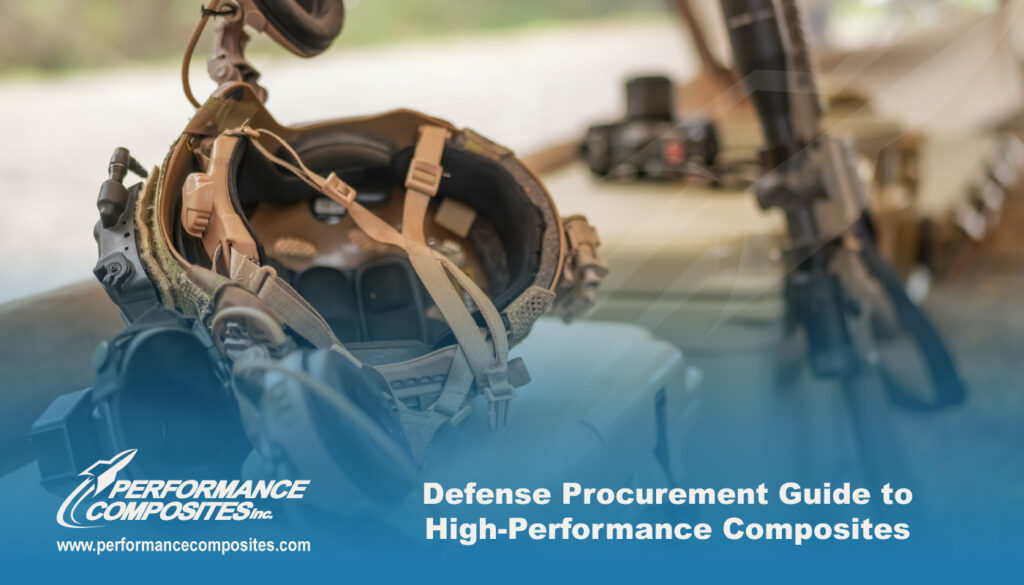
Selecting materials for military and government programs requires careful evaluation of performance, durability, and manufacturing capabilities. Defense and security composites manufacturing plays an important role in producing lightweight, high-strength components that meet demanding operational requirements. Procurement professionals must consider not only material performance but also the experience and capabilities of the manufacturing partner supporting each program.
Modern defense systems continue placing greater demands on weight reduction, structural performance, and long-term reliability. Defense composites manufacturing supports these objectives by producing engineered composite components for aircraft, ground vehicles, naval systems, radar equipment, communications systems, and other mission-critical applications where precision and consistency are essential.
Why High-Performance Composites Are Critical to Modern Defense Applications
Composite materials have become an important part of today’s defense industry because they offer significant performance advantages over many traditional materials. Their combination of high strength, reduced weight, corrosion resistance, and dimensional stability allows engineers to improve system performance without sacrificing durability.
Reducing overall weight can improve mobility, increase payload capacity, reduce fuel consumption, and enhance operational efficiency across numerous defense platforms. Composite materials also provide excellent fatigue resistance, making them suitable for components exposed to repeated stress over long service lives.
As defense technology continues evolving, advanced composite materials support increasingly sophisticated equipment and structural designs.
Key Material Properties Defense Procurement Officers Should Understand
Selecting the appropriate composite material begins with understanding the performance requirements of the finished component. Every defense application presents unique operating environments that influence material selection.
Important material characteristics include:
- High strength-to-weight ratio
- Structural stiffness
- Fatigue resistance
- Corrosion resistance
- Thermal stability
- Dimensional consistency
- Environmental durability
- Long-term reliability
Understanding these characteristics helps procurement teams evaluate whether a manufacturer can produce components capable of meeting demanding program requirements.
Common Defense Applications Where High-Performance Composites Excel
Advanced composites are used throughout modern defense systems because they can be engineered for highly specialized applications.
Common examples include:
- Aircraft structural components
- Radar system housings
- Communication equipment enclosures
- Ground vehicle assemblies
- Naval equipment
- Drone structures
- Electronic support systems
- Mission equipment panels
Throughout defense and security composites manufacturing, engineers work to optimize each component for its intended operational environment while balancing strength, weight, and manufacturability.
Qualification Standards, Certifications, and Compliance Requirements to Know
Defense manufacturing requires strict adherence to quality standards, documented manufacturing procedures, and customer-specific program requirements. Procurement teams should evaluate whether manufacturers maintain the systems necessary to consistently produce parts that satisfy contractual and technical specifications.
Quality management extends beyond final inspections. Manufacturers should maintain documented production procedures, material traceability, process controls, inspection protocols, and continuous quality monitoring throughout production.
These systems help reduce manufacturing variability while supporting consistent product performance across multiple production runs.
How to Evaluate Composite Manufacturers for Defense-Grade Work
Selecting a qualified manufacturing partner involves evaluating far more than production capacity. Procurement teams should review engineering capabilities, manufacturing experience, quality systems, tooling resources, and long-term production support.
Performance Composites offers a significant advantage by designing and manufacturing its tooling entirely in-house. Internal tooling capabilities provide greater control over production schedules, engineering modifications, manufacturing consistency, and process optimization.
Companies should also evaluate:
- Engineering expertise
- In-house tooling capabilities
- Manufacturing capacity
- Prototype development experience
- Quality management systems
- Communication and technical support
These capabilities contribute to more predictable project execution throughout defense composites manufacturing programs.
Lead Times, Supply Chain Considerations, and Program Risk Management
Meeting production schedules is essential for defense programs that often involve multiple suppliers and tightly coordinated manufacturing timelines. Delays affecting one supplier can impact numerous downstream operations.
Working with manufacturers that maintain strong internal engineering resources and in-house tooling capabilities can reduce scheduling risks while improving responsiveness when engineering changes become necessary.
Supply chain planning should also consider material availability, manufacturing capacity, contingency planning, and production scalability as programs move from development into higher production volumes.
Early collaboration between procurement teams and manufacturers often improves forecasting, scheduling, and overall program efficiency.
Partnering With the Right Composite Manufacturer for Long-Term Defense Programs
Successful defense programs often depend on long-term manufacturing relationships built on technical expertise, consistent quality, and dependable communication.
Performance Composites combines experienced engineering teams, advanced manufacturing capabilities, rigorous quality control, and fully integrated in-house tooling to support demanding government and defense customers. This comprehensive approach allows the company to respond efficiently to evolving program requirements while maintaining the consistency expected throughout defense and security composites manufacturing.
As defense programs continue advancing in complexity, selecting an experienced manufacturing partner capable of supporting long-term defense composites manufacturing projects can improve production efficiency, reduce program risk, and contribute to successful mission outcomes.
FAQs
Why are composite materials widely used in defense applications?
Composite materials provide an excellent combination of lightweight performance, high strength, corrosion resistance, fatigue resistance, and long-term durability, making them suitable for demanding military environments.
Why is in-house tooling important for defense manufacturing?
In-house tooling allows manufacturers to maintain greater control over quality, engineering changes, production schedules, and manufacturing consistency while reducing dependence on outside suppliers.
What should procurement teams look for in a composite manufacturer?
Procurement teams should evaluate engineering expertise, manufacturing capabilities, quality systems, production capacity, tooling resources, experience with complex programs, and long-term customer support.
How do quality control systems benefit defense programs?
Comprehensive quality systems help maintain consistent manufacturing processes, improve traceability, reduce variability, and support reliable production throughout every stage of manufacturing.
Why are long-term manufacturing partnerships important?
Long-term partnerships promote better communication, production planning, engineering collaboration, continuous process improvement, and dependable support as defense programs evolve.
Summary
Advanced composite materials continue playing an increasingly important role across today’s defense industry by providing lightweight, durable, and highly engineered solutions for demanding applications. Performance Composites supports government contractors and defense manufacturers through experienced engineering, in-house tooling, precision manufacturing, and comprehensive quality control. By combining technical expertise with dependable production capabilities, the company helps customers achieve successful outcomes in defense and security composites manufacturing while providing reliable support for long-term defense composites manufacturing programs.
Partner with Performance Composites for Defense and Security Industry Requirements
Reach out today for a free consultation to discuss how our tailored composite solutions can enhance efficiency and elevate innovation in the defense and security industry. Contact us – 310-328-6661.