

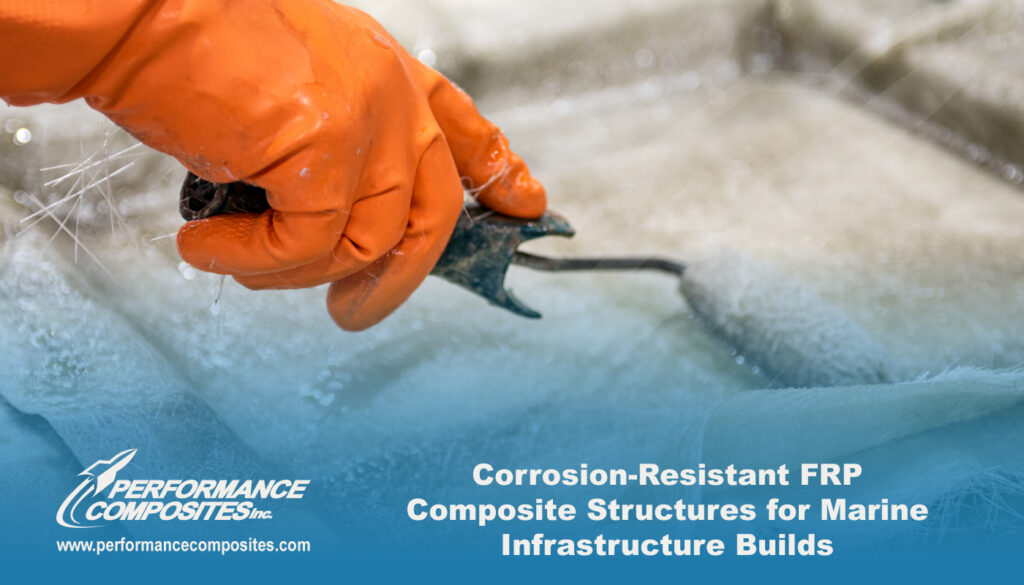
Marine infrastructure operates in one of the most demanding environments imaginable. Constant exposure to saltwater, moisture, ultraviolet radiation, changing temperatures, and heavy loading accelerates the deterioration of many traditional construction materials. As project owners seek longer-lasting, lower-maintenance solutions, infrastructure composite manufacturing continues to provide durable alternatives that improve structural performance while reducing lifecycle costs.
Selecting the proper materials is critical when designing fiberglass infrastructure components for docks, bridges, ports, seawalls, water treatment facilities, and other marine structures. FRP composites offer unique advantages that help engineers overcome corrosion challenges while maintaining strength, durability, and long-term reliability in harsh coastal and marine environments.
Why Corrosion Is the Biggest Enemy of Traditional Marine Infrastructure Materials
Marine environments expose infrastructure to continuous attack from saltwater, humidity, chemicals, and fluctuating weather conditions. Steel structures can corrode over time, while reinforced concrete may experience cracking, spalling, and reinforcement deterioration as moisture and chlorides penetrate the structure.
These conditions often increase maintenance costs, shorten service life, and require ongoing inspections and repairs. Infrastructure owners must balance structural performance with long-term maintenance budgets, making material selection one of the most important decisions during project planning.
What Makes FRP Composites Uniquely Suited for Harsh Marine Environments?
Fiber reinforced polymer (FRP) composites are engineered to perform where conventional materials often struggle. Their combination of lightweight construction, corrosion resistance, and structural strength makes them particularly well suited for demanding marine applications.
Key performance advantages include:
- Excellent corrosion resistance
• High strength-to-weight ratio
• Moisture resistance
• UV resistance
• Chemical resistance
• Dimensional stability
• Long service life
• Reduced maintenance requirements
Because FRP materials do not rust like steel or deteriorate in the same manner as many traditional materials, they provide dependable long-term performance in aggressive marine environments.
Key Marine Infrastructure Applications Where FRP Outperforms Steel and Concrete
FRP composites continue to replace conventional materials across numerous marine infrastructure applications where corrosion resistance and durability are essential.
Common applications include:
- Dock systems
• Marina structures
• Boardwalks
• Bridge components
• Seawalls
• Piers
• Utility platforms
• Water treatment facilities
• Coastal access structures
• Equipment enclosures
Their lighter weight often simplifies transportation and installation while helping reduce structural loading on supporting systems.
How FRP Composite Structures Are Engineered to Meet Marine Load and Safety Standards
Marine infrastructure components must withstand dynamic loading, environmental exposure, wave action, impact forces, and continuous operational demands. Successful designs require careful engineering to ensure structural integrity throughout the service life of the component.
Engineers evaluate numerous design factors, including expected loading conditions, environmental exposure, material selection, laminate schedules, reinforcement orientation, and safety requirements. Proper engineering ensures composite structures satisfy project specifications while maintaining dependable performance under demanding operating conditions.
Long-Term Cost Savings and Maintenance Advantages of FRP in Marine Builds
Initial material cost represents only one portion of an infrastructure project’s overall investment. Long-term maintenance, repairs, replacement costs, and operational downtime often have a greater impact on total lifecycle expenses.
FRP composites help reduce these long-term costs by minimizing corrosion-related repairs, reducing maintenance frequency, and extending service life. Their resistance to environmental deterioration allows infrastructure owners to spend less time performing repairs while improving overall asset reliability throughout decades of operation.
How to Specify and Source the Right FRP Composite Solutions for Marine Infrastructure
Every marine project presents unique engineering challenges. Selecting the proper manufacturer involves evaluating far more than production capacity alone.
Important considerations include:
- Engineering expertise
• Material selection capabilities
• Custom tooling
• Prototype development
• Manufacturing experience
• Quality management systems
• Production scalability
• Documentation and quality assurance
Working with an experienced manufacturer helps ensure components are engineered specifically for the project’s structural, environmental, and operational requirements.
How Performance Composites Supports Marine Infrastructure Projects
Performance Composites works with customers to develop engineered composite solutions for demanding infrastructure applications. From concept through production, the company provides engineering collaboration, prototype development, precision manufacturing, and an experienced in-house tooling department that designs and manufactures custom tooling for every stage of production.
Its capabilities in infrastructure composite manufacturing allow customers to receive custom composite solutions engineered for harsh environments while maintaining consistent quality, dimensional accuracy, and dependable long-term performance. By manufacturing fiberglass infrastructure components that satisfy demanding engineering specifications, Performance Composites supports marine infrastructure projects requiring durability, corrosion resistance, and reliable structural performance.
Frequently Asked Questions
Why are FRP composites commonly used in marine infrastructure?
FRP composites provide corrosion resistance, lightweight construction, structural strength, moisture resistance, and long-term durability that make them well suited for harsh marine environments.
How do FRP materials reduce maintenance?
Because FRP composites resist corrosion and environmental deterioration, they typically require less maintenance than many traditional construction materials exposed to saltwater and moisture.
What marine applications commonly use FRP components?
FRP components are used in docks, marinas, seawalls, bridge components, boardwalks, water treatment facilities, piers, utility platforms, and numerous coastal infrastructure projects.
Can FRP structures be custom engineered?
Yes. Composite structures are engineered to meet project-specific loading requirements, environmental conditions, dimensional specifications, and long-term performance objectives.
Why is engineering collaboration important for marine projects?
Early engineering collaboration helps optimize material selection, improve manufacturability, address structural requirements, and support efficient production throughout the project.
Summary
Marine infrastructure demands materials capable of delivering long-term performance despite constant exposure to corrosive environments and challenging operating conditions. Through infrastructure composite manufacturing, engineers can develop durable composite solutions that resist corrosion while providing outstanding structural performance and reduced maintenance requirements. By producing fiberglass infrastructure components engineered for marine applications, Performance Composites helps customers build reliable infrastructure designed to perform for years to come.
Partner with Performance Composite for Your Marine Industry Requirements
Reach out today for a free consultation to discuss how our tailored composite solutions can enhance efficiency and elevate innovation in the marine industry. Contact us – 310-328-6661.