

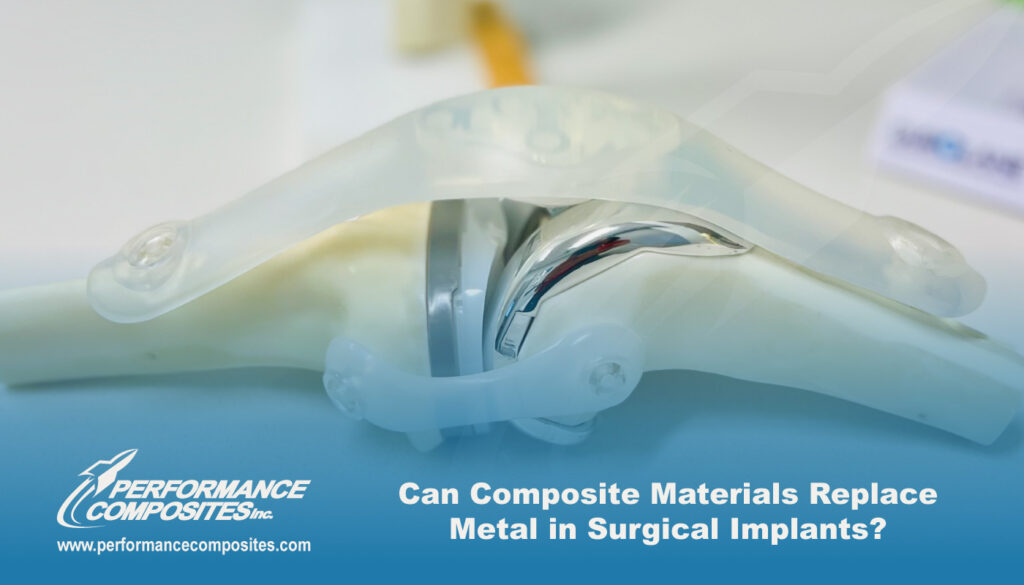
For decades, metal has been the standard material for many surgical implants because of its strength and long history of clinical use. Today, however, ongoing advancements in medical composites manufacturing are giving engineers and medical device manufacturers additional material options that can address some of the limitations associated with traditional metals. Composite materials are being developed to provide high strength, reduced weight, and improved performance for a growing number of orthopedic, spinal, trauma, and reconstructive applications.
Innovation across the healthcare industry continues driving demand for materials that support both patient outcomes and manufacturing efficiency. As a result, medical and radiology technologies increasingly incorporate advanced composite materials that improve imaging compatibility while maintaining the mechanical properties required for demanding medical environments. Although metals will continue serving an important role, composites are becoming an increasingly valuable solution for many surgical applications.
Custom Medical Composite Parts that Support Precision Healthcare Applications
The healthcare industry requires components manufactured to extremely precise specifications. Custom medical composite parts allow engineers to develop highly specialized solutions for implants, surgical instruments, diagnostic equipment, and medical devices where performance and consistency are critical.
Composite manufacturing also provides significant design flexibility. Fiber orientation, resin selection, wall thickness, and structural geometry can all be engineered to achieve specific mechanical properties while meeting the demanding quality standards required throughout the medical industry.
Why the Medical Industry Is Rethinking Metal as the Default Implant Material
Metal implants continue delivering excellent clinical results across many procedures, but they also present challenges that researchers continue working to address.
Certain metals possess stiffness levels that differ significantly from natural bone. This difference can contribute to stress shielding, where the implant absorbs more mechanical load than the surrounding bone tissue. Over time, this may influence how bone responds around the implant.
Metal implants can also create imaging artifacts during certain diagnostic procedures, making post-operative evaluations more difficult in some cases.
Composite materials provide engineers with additional design options that help overcome many of these challenges while maintaining structural performance.
The Key Properties That Make Composites a Viable Alternative to Metal
Modern composite materials combine reinforcing fibers with advanced resin systems to produce lightweight structures with exceptional mechanical performance.
Important advantages include:
- High strength-to-weight ratios
- Excellent fatigue resistance
- Corrosion resistance
- Design flexibility
- Improved imaging compatibility
- Tailored mechanical performance
Through continued advancements in medical composites manufacturing, engineers can optimize composite structures for specific implant applications while maintaining consistent quality and repeatable performance.
How Composite Implants Perform in Load-Bearing and Structural Applications
Different surgical implants experience different mechanical demands. Some primarily stabilize tissue, while others must support substantial loads over many years.
Composite materials can be engineered to deliver strength while maintaining lower overall weight. Their stiffness can also be adjusted to more closely resemble natural bone in certain applications, helping engineers design implants that balance support with long-term structural performance.
Ongoing research continues expanding the number of procedures where composite materials can provide reliable long-term performance.
Biocompatibility, Corrosion Resistance, and Long-Term Safety Considerations
Any implant material must demonstrate long-term safety before being approved for clinical use.
Composite materials developed for medical applications undergo extensive testing for biocompatibility, fatigue resistance, sterilization compatibility, wear performance, and long-term durability. Unlike many traditional metals, composites also resist corrosion caused by moisture and bodily fluids, helping maintain structural integrity over extended periods.
These evaluations ensure composite implants satisfy the rigorous safety expectations required for modern medical devices.
Where Composites are Already Replacing Metal in Surgical Applications
Composite materials already serve numerous healthcare applications where their unique performance characteristics offer measurable benefits.
Examples include:
- Spinal implants
- Orthopedic fixation devices
- Trauma plates
- External fixation systems
- Prosthetic components
- Surgical instrument assemblies
- Imaging-compatible implant systems
- Diagnostic equipment structures
Many medical and radiology applications also benefit from composite materials because they generate fewer imaging artifacts during CT and MRI examinations than certain metallic materials.
The Regulatory and Testing Hurdles Composite Implants Must Clear
Within the medical composites manufacturing industry, implants undergo some of the most demanding testing requirements of any manufactured product.
Before reaching patients, composite implants must complete comprehensive laboratory testing, mechanical validation, fatigue analysis, biocompatibility studies, sterilization evaluations, manufacturing verification, and regulatory review. Manufacturers must demonstrate consistent quality while proving long-term safety under expected clinical conditions.
These extensive evaluations help ensure composite implants meet the same high standards expected of traditional implant materials.
What the Future of Composite Surgical Implants Looks Like for Patients and Surgeons
Research into advanced medical composites manufacturing technology continues expanding as surgeons and manufacturers seek materials that improve both clinical performance and patient outcomes.
Continued innovation in medical composites manufacturing is expected to support increasingly advanced implant designs with optimized strength, improved imaging compatibility, and enhanced long-term durability. At the same time, advances in medical and radiology technologies will continue increasing demand for materials that support accurate diagnostic imaging before, during, and after treatment.
While metal will remain an essential material for many surgical procedures, composite technology is expected to play an increasingly important role in future implant development. As engineering capabilities continue advancing, composite materials will help support safer procedures, improved device performance, and innovative treatment solutions across a growing range of medical specialties.
Frequently Asked Questions
Can composite materials completely replace metal in surgical implants?
Not entirely. Metal remains the preferred material for many implant applications because of its long clinical history and excellent mechanical properties. However, composite materials are becoming an increasingly effective alternative for selected orthopedic, spinal, trauma, and reconstructive procedures where their unique performance characteristics offer important advantages.
Why are composite materials used in medical implants?
Composite materials provide high strength while remaining lightweight, resist corrosion, and can be engineered with mechanical properties tailored to specific applications. They also offer improved imaging compatibility in many medical and radiology procedures, making post-operative evaluations easier in certain situations.
What are custom medical composite parts used for?
Custom medical composite parts are manufactured for a variety of healthcare applications, including surgical implants, prosthetic components, orthopedic devices, spinal systems, surgical instruments, diagnostic equipment, and specialized medical assemblies. Each component is engineered to meet precise performance and quality requirements.
Are composite surgical implants safe for long-term use?
Yes. Before composite implants are approved for clinical use, they undergo extensive laboratory testing, mechanical validation, biocompatibility evaluations, fatigue testing, sterilization studies, and regulatory review. These processes help ensure they meet strict medical safety and performance standards.
How does medical composites manufacturing support future healthcare innovation?
Medical composites manufacturing allows engineers to develop lighter, stronger, and more specialized components for advanced medical devices and surgical implants. As materials and manufacturing technologies continue improving, composite solutions are expected to play an increasingly important role in supporting minimally invasive procedures, improved patient outcomes, and next-generation medical technologies.
Summary
Composite materials are becoming an increasingly valuable option for surgical implants and other advanced medical devices because they offer an excellent balance of strength, durability, corrosion resistance, and design flexibility. Through continued advancements in medical composites manufacturing, engineers are developing innovative implant solutions that improve mechanical performance while supporting greater imaging compatibility and long-term reliability. At the same time, ongoing innovation in medical and radiology applications continues expanding the role of composites across healthcare. Although metal will remain an essential material for many procedures, composite technology is helping shape the future of safer, more efficient, and increasingly specialized medical devices.
Best Medical Industry Manufacturing Partner: Performance Composites
Reach out today for a free consultation to discuss how our tailored composite solutions can enhance efficiency and elevate innovation in the medical industry. Contact us – 310-328-6661.