

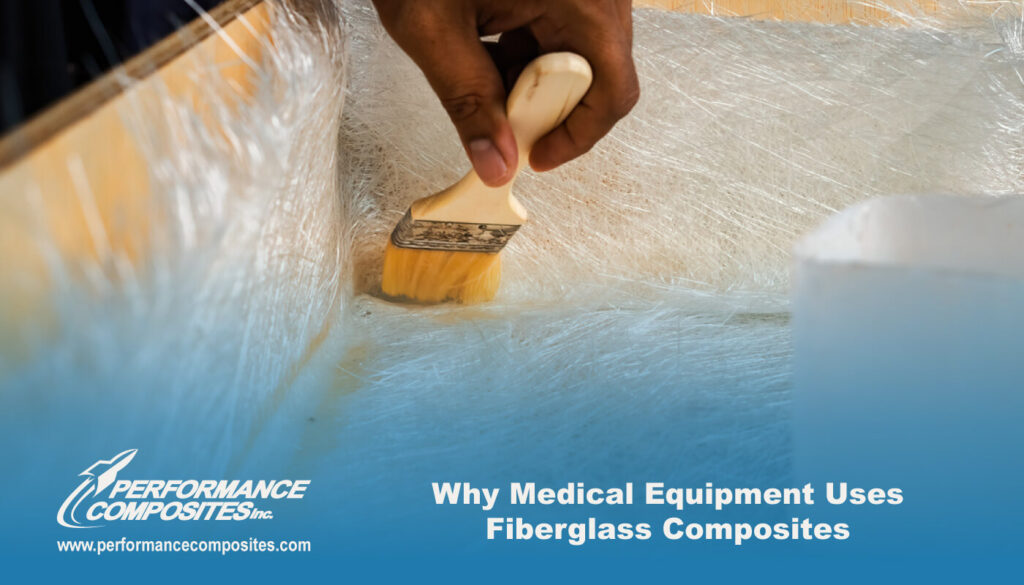
Modern healthcare facilities rely on equipment that is durable, lightweight, easy to maintain, and capable of supporting highly specialized technologies. From diagnostic imaging systems to laboratory equipment and patient care devices, manufacturers continue to explore advanced materials that improve performance while meeting strict engineering requirements. Medical composites manufacturing has become an important part of this evolution by providing materials that combine strength, corrosion resistance, and design flexibility for a wide range of healthcare applications.
As technology continues to advance, medical and radiology equipment often requires specialized enclosures, structural components, and protective housings that cannot always be produced efficiently with traditional materials. Medical and radiology manufacturers frequently utilize fiberglass composites because they offer design flexibility, long-term durability, and reliable performance in demanding healthcare environments. These characteristics continue to expand the role of composite materials throughout the medical industry.
Medical Composite Manufacturing Supports Modern Healthcare
Medical equipment manufacturers require materials capable of meeting demanding performance standards while accommodating complex product designs.
Medical Composite Manufacturing offers several advantages, including:
- Lightweight Construction
- Corrosion Resistance
- Design Flexibility
- Structural Strength
- Long-Term Durability
These characteristics make fiberglass composites suitable for many healthcare applications where reliability and precision are essential.
Why Radiology Equipment Benefits From Fiberglass Components
Medical imaging equipment often incorporates specialized structural components designed to support sophisticated diagnostic systems.
Examples include:
- Radiology Fiberglass Components
- MRI Equipment Enclosures
- X-Ray Fiberglass Components
- Medical Imaging Composite Components
Fiberglass materials can be engineered to meet specific dimensional and structural requirements while supporting the overall performance of imaging equipment.
Medical Fiberglass Fabrication Allows Complex Designs
Many medical products require highly customized shapes that would be difficult or expensive to manufacture using traditional materials.
Medical Fiberglass Fabrication allows manufacturers to produce:
- Curved Enclosures
- Equipment Covers
- Structural Supports
- Protective Panels
- Complex Housing Designs
These manufacturing capabilities provide engineers with greater flexibility during product development.
Custom Medical Composite Parts for Specialized Equipment
Standard components are not always suitable for highly specialized healthcare equipment.
Custom Medical Composite Parts are frequently developed for applications requiring:
- Precise Dimensions
- Specialized Mounting Features
- Lightweight Construction
- Equipment Protection
Custom engineering allows components to be designed specifically for the intended medical application rather than adapting existing products.
Radiology Composite Enclosures Protect Sensitive Systems
Diagnostic imaging equipment contains sophisticated electronics that require durable protective housings.
Radiology Composite Enclosures help provide:
- Structural Protection
- Corrosion Resistance
- Long Service Life
- Design Flexibility
Proper enclosure design contributes to both equipment protection and overall product reliability.
Fiberglass Medical Equipment Housings Improve Durability
Protective housings are used throughout hospitals, laboratories, and imaging facilities.
Fiberglass Medical Equipment Housings are commonly utilized because they provide:
- High Strength
- Low Weight
- Corrosion Resistance
- Attractive Finished Surfaces
- Long-Term Performance
These characteristics help support reliable equipment operation in demanding healthcare environments.
Lightweight Medical Composite Solutions Improve Equipment Design
Reducing equipment weight can simplify transportation, installation, servicing, and product design.
Lightweight Medical Composite Solutions are often selected because they allow engineers to reduce overall weight while maintaining structural integrity.
Benefits may include:
- Easier Handling
- Improved Equipment Mobility
- Reduced Structural Loads
- Greater Design Flexibility
These advantages support both manufacturers and healthcare providers.
Composite Materials for Medical Devices Continue To Expand
Advances in Composite Materials for Medical Devices continue to support new product development across the healthcare industry.
Fiberglass composites are now used in applications such as:
- Medical Device Housings
- Laboratory Equipment
- Imaging Systems
- Diagnostic Equipment
- Patient Support Equipment
As medical technology evolves, composite materials continue finding new applications across healthcare manufacturing.
Why Precision Manufacturing Matters
Medical products in medical composites manufacturing often require exceptionally tight tolerances and consistent manufacturing quality.
Experienced manufacturers typically emphasize:
- Precision Tooling
- Quality Inspection
- Engineering Collaboration
- Repeatable Production
Companies with dedicated engineering teams and in-house tooling capabilities are often able to maintain greater control throughout the manufacturing process while supporting specialized customer requirements.
The Future of Fiberglass in Medical Manufacturing
Demand continues to grow for advanced composite technologies capable of supporting next-generation healthcare equipment.
Ongoing developments include:
- Fiberglass Composite Manufacturer for Medical Industry Solutions
- Lightweight Radiology Structures
- Non-Corrosive Medical Composites
- Custom Fiberglass Medical Fabrication
As healthcare technology continues advancing, fiberglass composites are expected to remain an important material for equipment manufacturers seeking strength, durability, and design flexibility.
FAQs
Why are fiberglass composites used in medical equipment?
Fiberglass composites combine strength, lightweight construction, corrosion resistance, and design flexibility. These characteristics make them well suited for medical equipment, diagnostic systems, and structural components used throughout healthcare environments. Manufacturers often select composite materials because they support both product performance and long-term durability.
What types of medical equipment use fiberglass composites?
Fiberglass composites are commonly found in medical device housings, diagnostic imaging equipment, MRI equipment enclosures, X-ray fiberglass components, laboratory equipment, protective covers, and structural support components. Their versatility allows them to be incorporated into many different healthcare applications.
Why is lightweight construction important in medical equipment?
Reducing equipment weight can simplify transportation, installation, servicing, and day-to-day operation. Lightweight composite materials also allow engineers greater flexibility when designing complex medical products while maintaining structural performance and durability.
How does custom fiberglass fabrication benefit medical manufacturers?
Custom fiberglass fabrication allows manufacturers to produce specialized components that meet exact dimensional, structural, and functional requirements. This flexibility supports the development of advanced medical technologies that often cannot utilize standard off-the-shelf components.
Why do medical manufacturers work with composite specialists?
Experienced composite manufacturers provide engineering expertise, precision tooling, quality control, and specialized production capabilities. These services help ensure that medical components meet demanding performance standards while supporting consistent manufacturing quality across production runs.
Summary
Medical composites manufacturing continues to play an increasingly important role in the development of advanced healthcare equipment. Through lightweight construction, corrosion resistance, precision engineering, and outstanding design flexibility, fiberglass composites support a wide range of medical and radiology applications. As medical and radiology technologies continue to evolve, manufacturers will likely continue expanding the use of composite materials across diagnostic equipment, medical devices, and specialized healthcare systems.
Partner with Performance Composite for Medical and Radiology
Reach out today for a free consultation to discuss how our tailored composite solutions can enhance efficiency and elevate innovation in the medical and radiology industry. Contact us – 310-328-6661.